 More
More

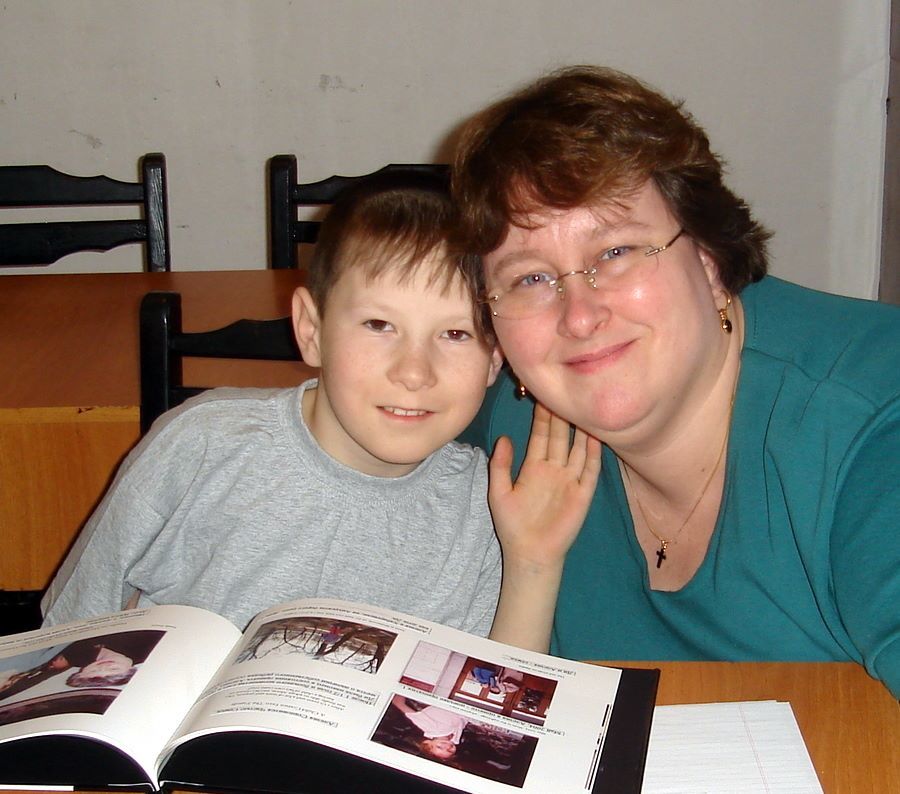
In the autumn of 2005, late one night, I turned on my desktop computer and opened an adoption agency’s website. There was a section featuring special-needs children available for adoption. I clicked through the photos. As always, the little faces filled me with sadness. I looked, but I didn’t click on any profiles. I dreaded what I might read. I had already seen so many children, and their stories so often left me in tears.
At the time, I had already adopted a little girl from Russia. My mother, who lived with us, encouraged me to consider adopting a little boy—one who spoke Russian. My daughter had spent six years in a Russian orphanage. She was used to being surrounded by other children and didn’t enjoy being an only child. Though she was thirteen physically, emotionally she was several years younger. Orphanages tend to hold children back in that way.
I felt an older boy with a manageable disability might be a good fit for our family. Still, after endless scrolling through international adoption websites, I wasn’t finding the right child.
So I said a prayer, asking God for guidance.
I clicked to the next page, and instantly one photo caught my eye.
A little boy stood next to a table in front of a white wall. He had a burr haircut, freckles, and an annoyed expression. He wore a red T-shirt and blue sweatpants. His left hand was tucked into his pocket, and his right arm rested on top of a birdcage—positioned so his amputation scar was clearly visible. I realized much later that the orphanage staff had likely told him to pose that way. He never would have done so otherwise.
The caption said his name was Igor. He was born in July 1996.
I gasped. My father had died in July 1996. I took it as a sign.
He also looked a bit like my brother had as a child—freckles and a burr haircut. I felt it immediately: this little boy was my son.
The next day I emailed the agency. They called and told me Igor lived in an orphanage in northern Kazakhstan. I had to look at a map. Kazakhstan is a large country south of Russia, between Europe and China.
Adopting from Russia in 2003–2004 had been complicated and expensive, requiring a home study and an international dossier. I had first met my daughter when my choir visited her orphanage. She was spunky and blonde, and looked about eight. I later learned she was eleven. I adopted her anyway. I knew she was mine.
Adopting my son was different. The Kazakhstan dossier was similar but came with its own quirks. I had to ask my vet to write a letter stating my mother and I were good pet parents and that our eight-pound Yorkie-Poo had all her shots. I also had to repeat a TB skin test six times because my travel dates kept changing.
While waiting, I wrote a children’s book called Jack’s New Family to help Igor understand what life in an American family might be like. A friend translated it into Russian so both languages could appear on each page. I self-published it because there was no time to go the traditional route.
During the year-and-a-half adoption process, I was unusually lucky. A nonprofit called The Antares Foundation worked in the city. The two women who ran it visited the orphanage, took photos, and told me about my son. A local agency representative did the same. I learned that Igor’s missing hand didn’t stop him from doing anything. He got along well with other children, was learning English, and even did embroidery as therapy, creating beautiful handkerchiefs.
In March 2007, I finally traveled to Kazakhstan. For three weeks, I visited the orphanage daily. An agency representative—ironically also named Igor—translated for us. My son was shy at first, but we bonded quickly through games, drawing, and conversation. On the second day, he started calling me Mama.
A few days in, I asked how he’d feel about an American name. After some thought, he chose Michael Robert. From that point on, everyone called him Michael. At the adoption hearing, the judge asked his name. Michael stood tall and announced, “Michael Robert Thompson!” The room erupted in laughter.
After weeks of paperwork and another trip, we finally landed in Atlanta on May 9, 2007. I wanted to kiss the ground.
I had started blogging in 2005, after bringing my daughter home. Friends and family wanted daily updates, and blogging was easier. Years later, when the platform announced it was shutting down, I downloaded everything. I realized the most important entries were about Michael’s adoption and his first year home. That became the foundation for my book.
Michael loved music, dancing, cooking with me, soccer, and his Game Boy. His missing hand was barely noticeable. He danced constantly—especially after watching An American in Paris. He had a natural grace.
There were challenges, of course. English came slowly. American food puzzled him. He hated coats, brushing his teeth, and too many choices. One day in Walmart, overwhelmed by options, he collapsed on the floor and wailed, “Too many choices, Mom!” We went home.
Over time, we learned about his early life. He lived with his birth mother until age eight. She was a severe alcoholic. He was neglected, beaten, and made to care for her. Older boys assaulted him when he was five, leading to frostbite and the loss of his hand. He later told me the hospital stay afterward was the first time he had ever felt warm, fed, and safe.
Those details broke my heart.
Writing The Michael Chronicles helped me see that those early years with my children were the happiest of my life. Our family was unconventional, but it was full of love.
Today, Michael is 29. He’s strong, funny, and resilient. He works as a professional cook, has returned to college, and loves dancing, art, and the outdoors. He survived things many people could not.
I never imagined building a family through adoption. But at 40, after years of failed relationships, I asked God for a miracle—and adoption was the answer. My hope is that my writing helps others see the joy and possibility in adopting older children.
My book, The Michael Chronicles, is available on Amazon.